Categories
Non-magnetic Tungsten Carbide Balls Introduction
Non-magnetic tungsten carbide balls are of high hardness, good wear resistance, small thermal expansion coefficient and good chemical stability, making it has times of longer service life than that of non-magnetic steel balls.
Aug 12th,2021
820 Views
Non-magnetic Tungsten Carbide Balls Introduction
Non-magnetic tungsten carbide balls have a series of excellent properties such as high hardness, good wear resistance, small thermal expansion coefficient and good chemical stability. They are widely used in various industry fields. With the improvement of manufacturing and application technology, tungsten carbide has been extended to be used in thermal recovery wells and sand production wells. Generally, tungsten carbide balls are ferromagnetic and tend to stick to powder during magnetic powder forming and processing, which will seriously affect the dimensional accuracy and surface quality of the magnetic blank. Therefore, they are not suitable for magnetic powder molds. Due to the poor wear resistance of non-magnetic steel balls, the service life of molds made with them is generally only tens of thousands of times. Non-magnetic tungsten carbide balls make it double, ten times or even hundreds of times the service life. Non-magnetic tungsten carbide balls have now developed into one of the indispensable tungsten carbide varieties.
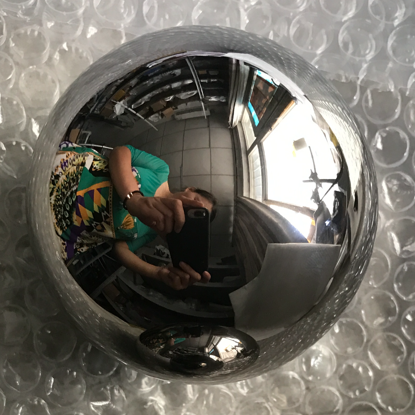 Types of non-magnetic tungsten carbide balls:
1. WC-Ni series. This series can be used to add tungsten powder to reduce the carbon content or strictly control the carbon content, add some alloying elements, such as the composition of WC·0.75AI·14.25Ni(%) alloy is non-strong magnetic at room temperature, and its bending strength It is 1670MN/mZ and the hardness is HRA87.4, but the permeability of this WC-Ni alloy is still high, so it is rarely used in China.
2. WC-Cr3C2-Ni series. 1%~3%Cr3C2 needs to be added during industrial production.
3. WC-Cr3C2-Mo-Ni series. Adding alloying elements such as Mo, Ta, AI, Co, etc., when a small amount of Mo is added to the WC-Cr3C2-Ni system, the carbon content of WC in the alloy will be reduced, which is conducive to the formation of non-hypertrophic phases.
If you have any questions on non-magnetic tungsten carbide balls, please feel free to contact info@maxcarbide.com